Monday, April 24, 2006
Monday, April 17, 2006
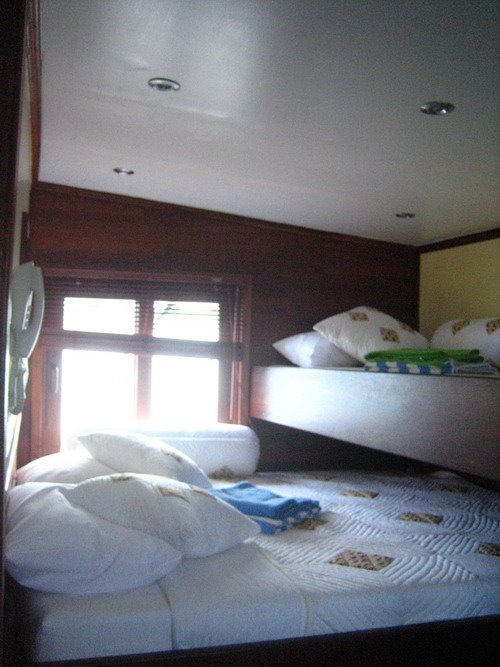
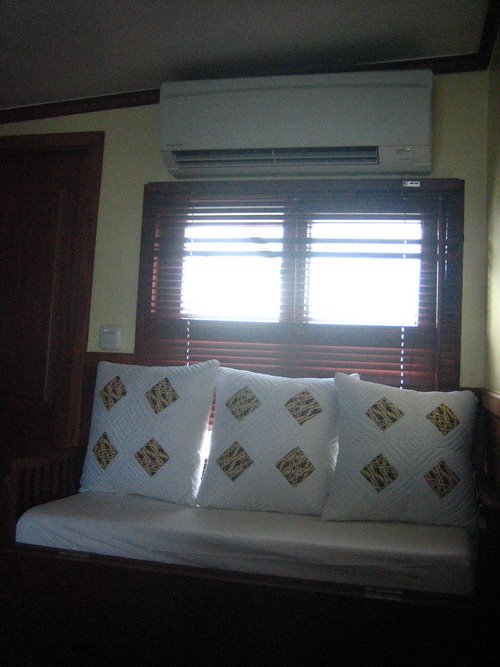
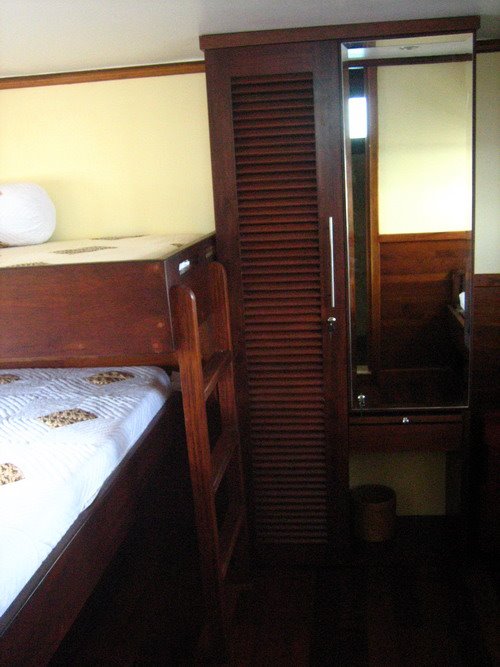
New Look Cabins for More Successful Future!


April 12, 2006
Dear preferred traveler,
Warmest greetings from Sea Trek Bali!
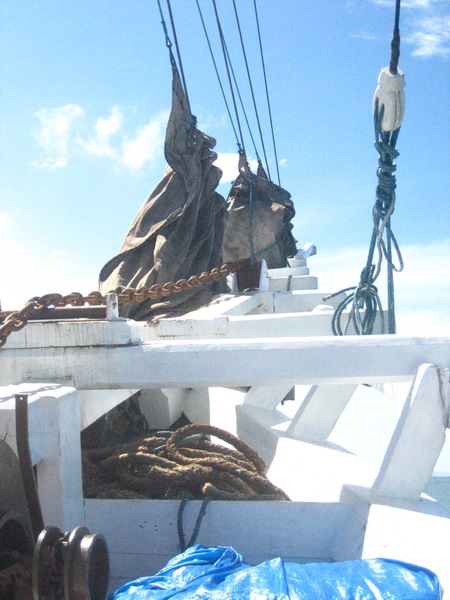
After almost 4 months of hard work carrying out a major refit of her entire interior, on April 12 our schooner Katharina set sail on her first cruise of 2006.
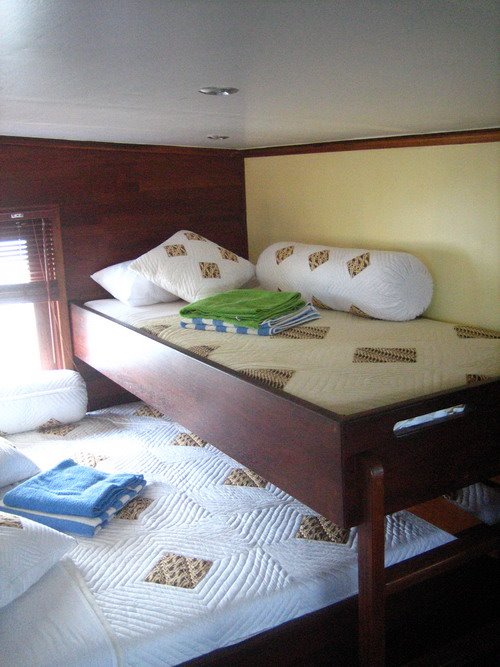
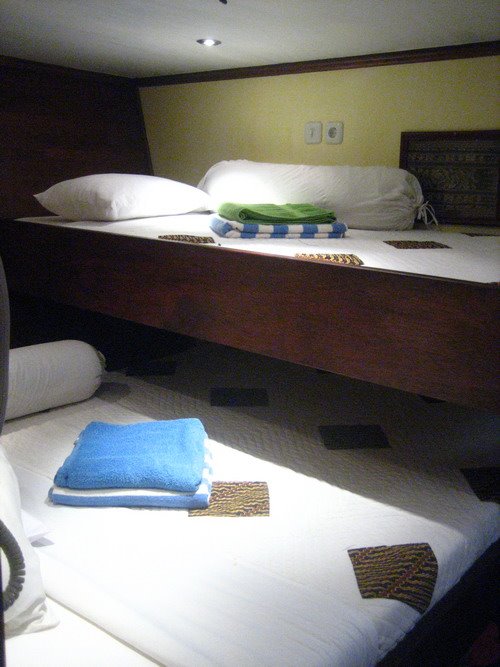
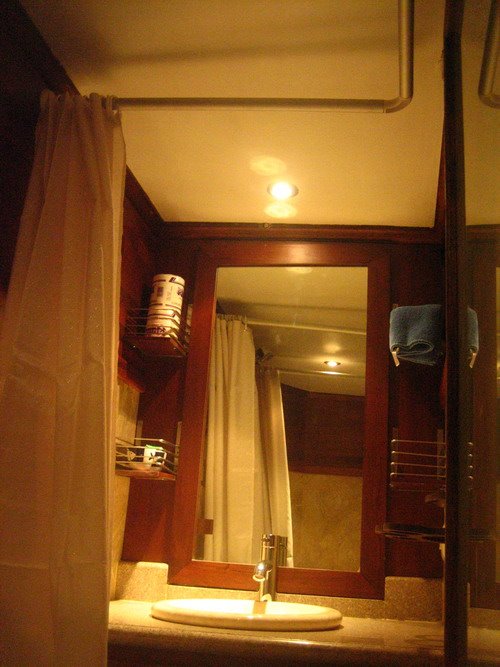
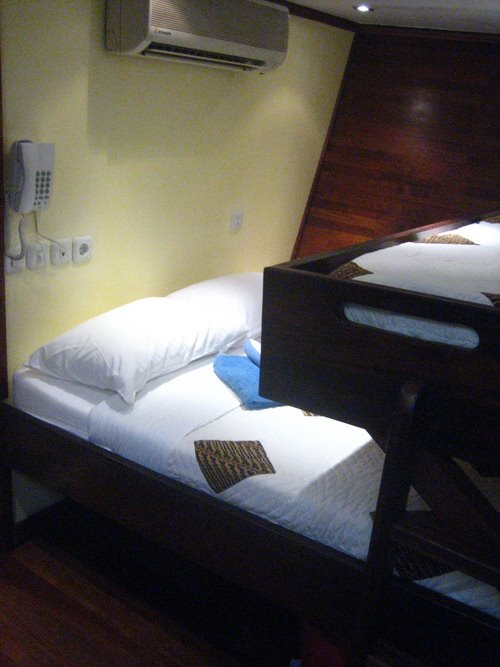
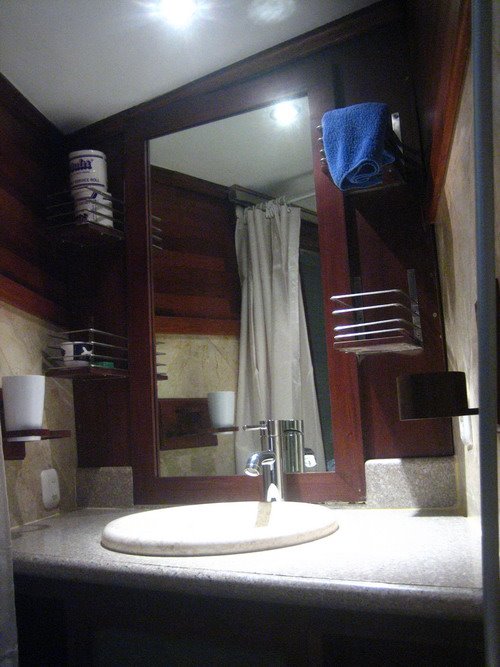
The Katharina in her new look boasts 7 cabins designed and laid out in a truly 5 star fashion. Lower decks you may find 2 cabins with upper & lower beds and 4 cabins with one double lower and one upper single bed. All private bathrooms are laid out in marble, granite and mosaic, while the cabins have newly installed amenities as a private safety box, intercom for room service and soft lighting
The two smaller upper deck cabins have been conjoined into one large (family) cabin with a king size (lower) bed, a single (upper) bed and a children’s bedstead/bench (daytime). Space allows for an extra bed if desired. This cabin is aimed to provide a more spacious cabin for a group of friends or family members or for honeymooners. Stretched out on your king size bed you may greatly enjoy the view both on starboard and portside of the islands leisurely passing by.
Welcome joining aboard a cruise of a life time!
Warmest regards,
SEA TREK Sailing Adventures
(Photos Courtesy of Dwi Setijo Widodo - 11 April 2006)
Friday, April 14, 2006
Saturday, February 11, 2006
Banda Islands & Spices

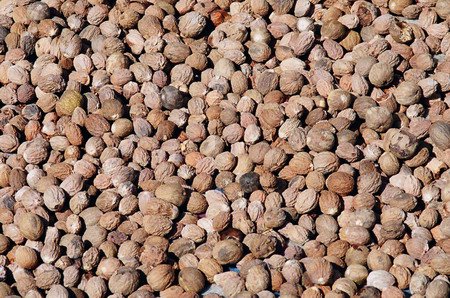
Nutmeg & Mace in Banda Islands
Nutmegs, which are easily found drying in the sun in Banda Islands, and mace enter into a bewildering number of preparation in flavoring and medicines. In Europe and the United States, the spices find their way primarily into food and condiments, while in Asia they are used mainly in the production of indigenous medical preparation.
(Compiled from "Maluku, Indonesian Spice Islands", Periplus & photo courtesy of Claudia Caduff, 2005)
More information about "Spices & Banda Islands":
Spices - Exotic Flavors & Medicine
Spice Islands Archaeology Project
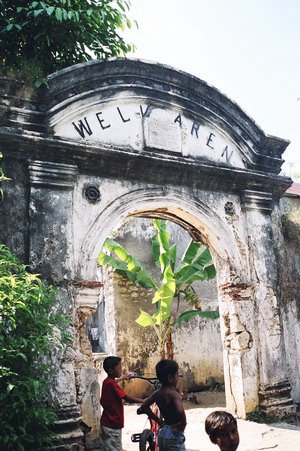
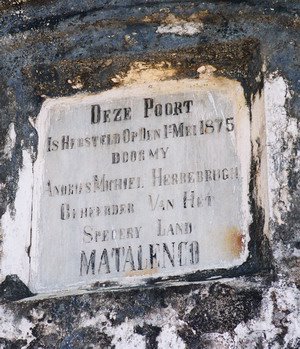
The Ruins of Dutch Era in Banda Island


(Photo Courtesy of Claudia Caduff, 2005)
Interested in joining an exploratory cruise to Banda Islands this year?
Please visit our website for more details about Cruise WC 1 (Flores-Banda-Kei).
Friday, January 27, 2006
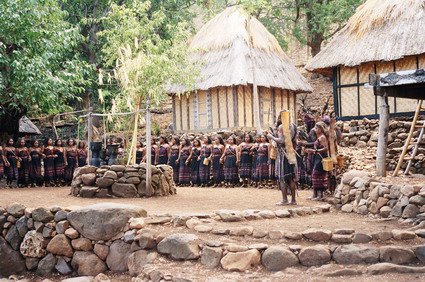
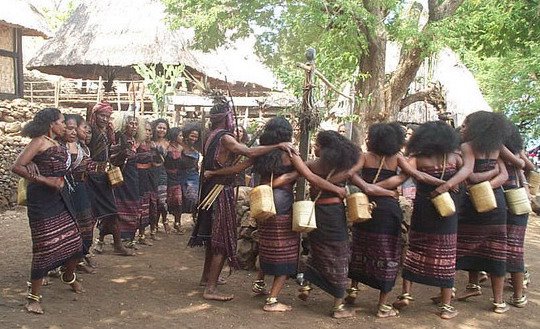
A Short Visit to Alor Island, Cruise WC 02 2005 (Flores-Banda-Kei)


(Photos Courtesy of Claudia Caduff, 2005)
For more information about Cruise Flores-Banda-Kei 2006,
kindly click the link: Cruise WC 1 (Flores-Banda-Kei), Oct 19/Oct 31, 2006.
Link to: The Regional Goverment of Alor (Information & Development Centre)
Wednesday, January 25, 2006
Asmat Woodcarving Art

Asmat Carving Pattern, Asmat Tribe, West Papua (Photo Courtesy of Ushuaia, 2000)
Asmat woodcarving is considered one among the world's finest. To the Asmat, woodcarving was inextricably connencted with the spirit world, and therefore, the carving can not just be principally considered aesthetic objects.
Much of the highly original art of the Asmat is symbolic of warfare, headhunting, and warrior-ancestor veneration.
For centuries, the Asmat were preoccupied with the necessity of appeasing ancestor spirits, producing a wealth of superbly designed shields, canoes, sculptured figures, and drums.
(Articles Courtesy of Footprint Adventures)

Asmat Art Museum, West Papua (Photo Courtesy of Ushuaia, 2000)
Thursday, January 12, 2006
The Making of Sago Palm Flour, Asmat Tribe, West Papua


(Photos Courtesy of Claudia Caduff, 2005)
The sago palms (metroxylon sagu) are commonly seen palms in West Papua (as well in some areas of Moluccas Islands and many regions in South East Asia). Similar to coconut trees, sago palms considered as very useful plants, the trees of life, for the people of Papua.
The above pictures describe how the Asmat women are preparing to make sago flour. A trunk of a suckering palm is felled just before the appearance of its terminal inflorescence. Its carbohydrate content is then at its highest level in order to produce seeds. The marrow of the stem is laboriously chopped out as finely as possible and its starch then washed out and separated from the cellulose. This gooey substance is cooked in a similar way to a pancake and eaten perhaps with freshly caught fish. It has been said that "...where sagu palm grows, nobody ever goes hungry".
From Cruise WC 03 (Kei-Agats-Timika), Nov 7/Nov 18, 2005


(All Photos Courtesy of Claudia Caduff)
For further information on Cruise Kei-Agats-Timika 2006,
kindly click the link: Cruise WC 2 (Kei-Agats-Timika), Nov 2/Nov 13, 2006.
Tuesday, December 20, 2005
Saturday, December 17, 2005
Riung & Flying Foxes, Flores Island


(Photos Courtesy of Martine Bergeron & Marc Bergeron, Map Courtesy of Periplus)
Riung village, on the coast north of Bajawa, offers beautiful coral gardens in the Seventeen Island National Reserve, as well as thousands of flying foxes.
The National Park, Pulau Tujuhbelas (Seventeen Islands), in fact has more than 20 islands, but, in a gesture of patriotism, the number was declared to 17, to conform to Indonesia's Independence Day, August 17.
The biggest island is Pulau Ontoloe which is hilly, covered with short grass and a few trees, and fringed with mangroves. On the north coast of Ontoloe Island, the large fruit-eating bats called flying foxes mass in which the mangrove tress.
At high tide, our boat can get quite close to shore, where the bats hang upside down in the tree, thick as flies. A few shouts send them flying , and you can see thousands of the bats, with reddish fur and black wings (in some parts of Eastern Indonesia area, some people eat these kind of bats which are said juicy & yummy! Since the bats eat only fruits...), take off from the trees and wheel around in the sky before setting down again. A magnificent spectacle! these bats are said to forage every night as far away as Bajawa and Ruteng.
(Articles freely quoted from Periplus - East of Bali "From Lombok to Timor")
Friday, December 16, 2005
Meet the Komodo Dragons, Komodo & Rinca Island


(Courtesy of Martine Bergeron & Miguel Cotton)
Komodo National Park
Komodo National Park is located in the center of the Indonesian archipelago, between the islands of Sumbawa and Flores. Established in 1980, initially the main purpose of the Park was to conserve the unique Komodo dragon (Varanus komodoensis) and its habitat. However, over the years, the goals for the Park have expanded to protecting its entire biodiversity, both terrestrial and marine. In 1986, the Park was declared a World Heritage Site and a Man and Biosphere Reserve by UNESCO, both indications of the Park's biological importance.
Komodo National Park includes three major islands: Komodo, Rinca and Padar, as well as numerous smaller islands creating a total surface area (marine and land) of 1817km (proposed extensions would bring the total surface area up to 2,321km2). As well as being home to the Komodo dragon, the Park provides refuge for many other notable terrestrial species such as the orange-footed scrub fowl, an endemic rat, and the Timor deer. Moreover, the Park includes one of the richest marine environments including coral reefs, mangroves, seagrass beds, seamounts, and semi-enclosed bays. These habitats harbor more than 1,000 species of fish, some 260 species of reef-building coral, and 70 species of sponges. Dugong, sharks, manta rays, at least 14 species of whales, dolphins, and sea turtles also make Komodo National Park their home.
A Journey to Encounter Komodo Dragons, Komodo & Rinca Island

(Courtesy of Marc Bergeron)

(Courtesy of Marc Bergeron)

(Courtesy of Marc Bergeron)

(Courtesy of Miguel Cotton)

(Courtesy of Miguel Cotton)

Map of Komodo & Rinca Island
For more information about cruise trips to Komodo & Rinca Island 2006,
kindly click the link: Cruise F (Lombok-Flores-Lombok).
Thursday, December 15, 2005
The Smiling Faces of Indonesia

Welcoming Big Smiles, Sumbawa
(Courtesy of Marc Bergeron)

Smile Souvenir from Sumbawa
(Courtesy of Marc Bergeron)

Shy Smile for A Photo Session, Sumbawa
(Courtesy of Marc Bergeron)

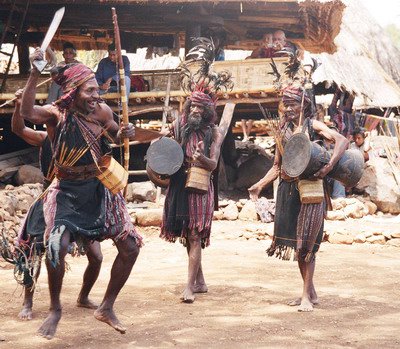
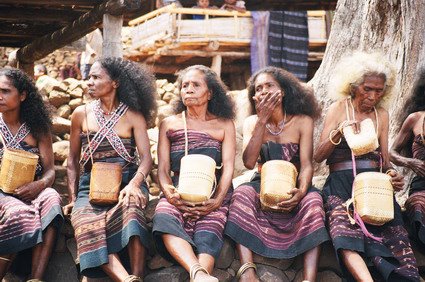
A Smile before the Dancing Performance, Alor
(Courtesy of De Rham)

A Warm Welcoming Party, West Papua (Irian Jaya)
(Courtesy of Claudia Caduff)
Welcome on board of our Phinisi Schooner ‘Katharina’!


Welcome on board of our Phinisi Schooner ‘Katharina’!
We invite you to embark on a truly adventurous cruise of a life time exploring the exotic islands of the ‘Southern Seas’.
Our sailing cruises are primarily focusing on Eastern Indonesia. Highlights during our sailing adventures are the Lesser Sunda Islands (Lombok, Sumbawa, Komodo, Rinca, Flores), the Moluccas, and Irian Jaya (West-Papua) where we will visit among other places the famous Asmat tribe.
Our exploratory cruises will bring you to the unknown and extraordinary, to dragons in Komodo, whale hunters in Lembata, warrior tribes in Papua. We follow the ancient spice routes to the gorgeous Banda’s, trace the vestiges of Captain Cook in the Lesser Sunda Islands and marvel at undiscovered coral reefs the tropical treasures of the underwater world.
Cruising in Indonesia aboard Katharina means sailing adventures to the end of the world, truly exploratory cruises in the wake of ancient discoverers like Magellan, Cook, and Tasman.
Our home base is Lombok from where sailing charters may be organized tailored to your needs.
Rejoice this exclusive experience on Planet Earth light years away from the maddening crowds!
(Photos courtesy of De Rham & Miguel Cotton)